Understand the Airport Layout First
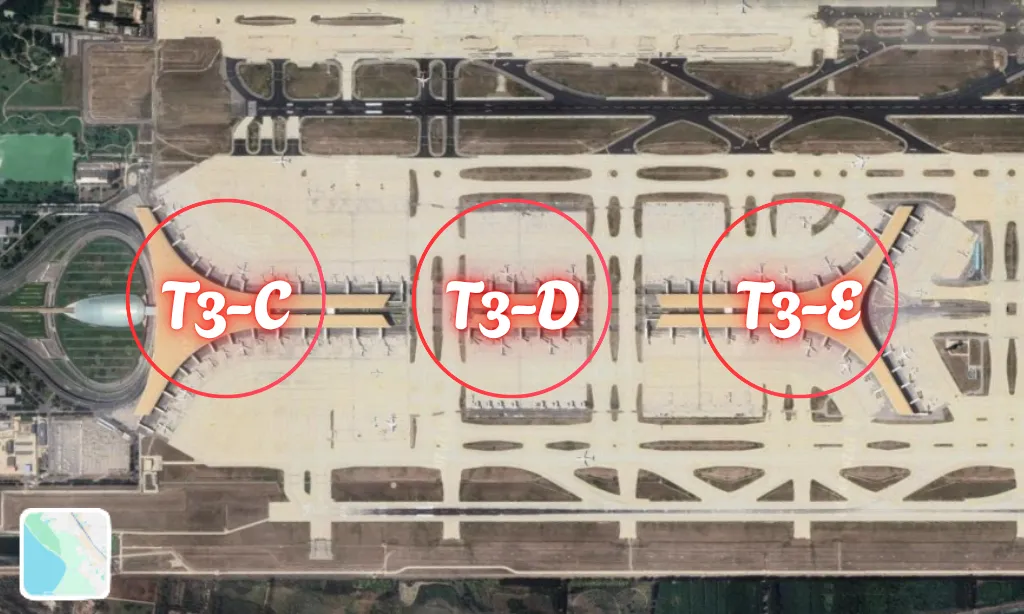
Beijing Capital International Airport (BCIA) is one of the world’s biggest and busiest airports and consists of three terminals. The most spectacular is Terminal 3 (T3), which was created as an architectural achievement by Norman Foster and serves as the airport’s main hub for both domestic and international departures.
Terminal 3 itself contains three sub-terminals, each with its own purpose. T3-C provides services for domestic flights, while sub-terminals T3-D and T3-E serve mostly international routes, with T3-E being the primary terminal for most long-haul flights. Despite the building’s huge size, it is easy to travel between different areas using the APM train that runs between the three sub-terminals.
Nevertheless, because of the massive size of T3, some delays can be expected when traveling to the station, boarding the train, and passing through security. It is recommended to allow an additional 15–20 minutes when transferring between T3-C and T3-E, and up to 30 minutes if time permits.
Know Your Layover Length — It Matters
How you allocate your time when transiting at Beijing Capital International Airport (PEK) varies depending on the number of hours you have before your next flight. It can be as simple as having something to eat at the Global Kitchen or as elaborate as heading into the city, or even staying overnight in one of the several hotels near the airport, giving transit passengers an opportunity to relax and rejuvenate for their next flight. Below is a comprehensive guide to making the best use of your time.
Less Than 3 hrs – Stay Airside and Keep It Simple
If you have less than three hours, then your main task will be to spend your time relaxing and staying close to the gate from which you will depart. Do not consider leaving the airport in this case.
Things You Can Do:
- Purchase duty-free items – Terminal 3 has quite a lot of international goods, such as makeup, drinks, and Chinese souvenirs.
- Have your meals at Global Kitchen or other restaurants offering various cuisines.
- Find a comfortable resting place, such as a lounge that allows Priority Pass or other airline memberships.
- Complete immigration procedures beforehand.
Key advice: Factor in walking time between gates — Terminal 3 is one of the largest terminal buildings in the world, so distances can be surprisingly long.
3–6 Hours – Get to Know Terminal 3
This is a relaxed period where you can properly enjoy the airport without feeling hurried or bored.
Activities you can do:
- Take a walk through the entire retail concourse – Terminal 3 is beautiful and deserves an exploratory stroll.
- Try different food options – sample dim sum, noodle dishes, or sit-down meals instead of sticking to just one restaurant.
- Utilize spa services – some airside facilities provide massage chairs, foot massages, and other soothing treatments to help relieve travel stress.
- Visit bookstores and gadget shops for reading material or devices to pass the time.
- Relax in a quiet lounge area or pay for a sleep pod, if available.
Important tip: Drink plenty of fluids and opt for light meals if your destination is far away.
6 to 24 Hours — Consider Venturing Into Beijing
Having enough time for a six-hour layover or more brings with it the incredible opportunity to see one of the most amazing cities in the world, but only with proper organization and planning based on visa requirements and available time.
Regarding visa situation:
China provides its visitors with a 144-hour visa-free transit policy, which allows you to freely explore the city of Beijing and even the surrounding area without any prior visa arrangements. If you are not eligible, then in order to leave the airport area, you will need an official visa from China.
Always check what type of visa applies to your passport country before leaving.
What you could do (if you are eligible):
- Explore Tiananmen Square and the Forbidden City (the Palace Museum), both located just half an hour away from the airport by train or taxi.
- Take a walk down the famous Wangfujing Street, known for its street food and shops.
- With about 12 to 24 hours, visit the Mutianyu section of the Great Wall.
Practical tips for a city visit:
- Take the Airport Express train (fast, affordable, about 30 minutes to city center) rather than a taxi during peak hours.
- Keep a clear buffer of at least 3 hours before your flight to return, clear security, and reach your gate comfortably.
- Carry your passport and boarding pass at all times — you will need them at checkpoints.
- Download offline maps (Google Maps may be restricted; use Baidu Maps or Maps.me).
Key advice: Do not let excitement push you to cut the return timeline too tight. Beijing’s traffic can be unpredictable, and missing an international connection is a costly mistake.
Check Visa & Transit Requirements First
Before making any plans, confirm your transit status.
- Staying airside? No visa needed — simply remain within the international transit zone.
- Heading into the city? China’s 144-hour transit visa-free policy allows nationals from many eligible countries to explore Beijing without a full Chinese visa.
Always verify your eligibility and the latest policy with the Chinese Embassy or your airline before travel, as rules can change without notice.
Enjoy Food at the “Global Kitchen” in Terminal 3
The highlight of Beijing Capital International Airport’s Terminal 3 is its food and beverage section, referred to as the “Global Kitchen.” There are 70+ food and beverage outlets operating in the terminal, offering a diverse range of international cuisines — making it one of the best dining options at any airport in Asia.
Reasonable Pricing
A promise has been made by the authorities to ensure that prices at the T3 outlets are the same as in the city center — something that is rarely found at an international airport. This means you can enjoy quality meals at reasonable prices, instead of being charged extra for eating at the airport. Enjoy your meal rather than opting for just a quick bite.
Chinese Cuisine
The terminal provides authentic cuisine from all over China, such as hand-pulled noodles, dumplings, and even the world-famous Peking duck, offering an excellent opportunity for first-time visitors to try the cuisine in an authentic way. It can be enjoyed either before or after your trip.
Bakery & Café
There are several bakeries and cafés offering freshly baked pastries, espressos, sandwiches, and other items from early morning till late night, which is convenient for passengers with very early or late flights.
Western Fast Food
For passengers who prefer fast food with ease and predictability, international fast-food chains can be found throughout the terminal.
Desserts & Ice Cream
Different types of desserts, sweets, and ice creams can be found throughout the terminal, making them ideal after a tiring flight or during layovers at the gates.
Tip: While planning your meals here, make sure to try the Chinese cuisine, as the food offered here is far more authentic than what most international airports provide, and that too at reasonable prices.
Shop in the Vast Commercial Area
Terminal 3’s commercial district is among the largest airport retail areas in the world. With a total area of 45,200 m²—twice the space of Lufthansa Shopping Center—it serves as a full-scale commercial hub rather than just a transit space.
Domestic Retail
Domestic shopping is divided into fashion, gifts, electronics, and Chinese specialties. This is the best place to look for unique gift ideas, ranging from tea sets, silk items, traditional foods, local delicacies, and handmade gifts to modern fashion and gadgets. Whether you intend to purchase something for personal use or to take home as a present, this area has a lot to offer.
Duty-Free Stores
The duty-free section includes perfumes, luxury products, premium alcohol, cosmetics, and jewelry, among other items that can be purchased without paying customs duties. There are many well-established brands in this section.
Convenience Services
Apart from shopping, about 7,200 m² of space caters to the various needs of passengers, including banks and foreign currency exchange services, internet centers, printing, and other facilities required for daily tasks. Whether you need local currency, a SIM card, or just want to send an email, you’ll find everything here.
Shopping Hints: The duty-free allowance varies according to each destination country’s rules. Before buying anything from duty-free shops, be aware of the limits on liquor, tobacco products, and luxury goods to prevent confiscation. Keep your receipts safe as proof of purchase.
Access Business & Internet Services
The convenience-service zone within T3 ensures that business travellers are well catered for. Banking counters, currency exchange kiosks, and ATMs are available throughout the terminal. Business centres offer printing, scanning, and workstation access for those with pressing work needs.
Internet access is available throughout the airport. Free Wi-Fi is offered across the terminals, though connection speeds may vary by location. Business centre computers are also available for a fee if you need a stable, fast connection.
Note on internet access in China
Standard VPN use is restricted in China. If you rely on services blocked on the mainland (Google, WhatsApp, Instagram, etc.), prepare accordingly before your journey or confirm your airline’s lounge offers unrestricted connectivity.
Rest, Refresh, and Recover
T3 offers several options for passengers who need to rest during long layovers:
- Pay-per-use transit hotels and sleep pods available within the airport for short rest periods.
- Comfortable seating areas and quiet zones scattered throughout all concourses.
- Shower facilities in select lounges and transit hotels for freshening up.
- Pharmacy and convenience stores for travel essentials, toiletries, and snacks.
Navigate Efficiently
- Pick up an airport map from any information desk immediately after clearing immigration or security. The terminals are large enough that wandering aimlessly costs significant time.
- Use the APM (Automated People Mover) train to move between T3’s sub-terminals quickly. It runs frequently and is free of charge.
- Re-confirm your departure gate early, as gate changes are not uncommon at BCIA. Departure boards are plentiful throughout all terminals.
- Currency exchange is best done at bank counters in the terminal rather than at private kiosks, which may offer less favourable rates.
- Plan to be at your gate at least 45–60 minutes before departure for international flights. Security and passport control queues can be lengthy during peak hours.
Quick Reference: T3 at a Glance
Beijing Capital International Airport’s Terminal 3 is a truly world-class facility in every way — not only does it boast 150 gates, 72 dining spots under the Global Kitchen branding, and a commercial district twice the size of Lufthansa Shopping Center at 45,200 m², but its design also ensures that all visitors remain comfortable, entertained, and well served throughout their layover. The opening of Terminal 3 itself increased passenger capacity by 72 million annually, meaning that today the airport handles around 90 million travelers each year, and such figures speak for themselves regarding its global importance. No matter whether you have two hours or even twenty hours of free time, there will be plenty of ways to enjoy your stay. However, regardless of this, it is always advisable to contact your airline and check all details on the airport’s official website.